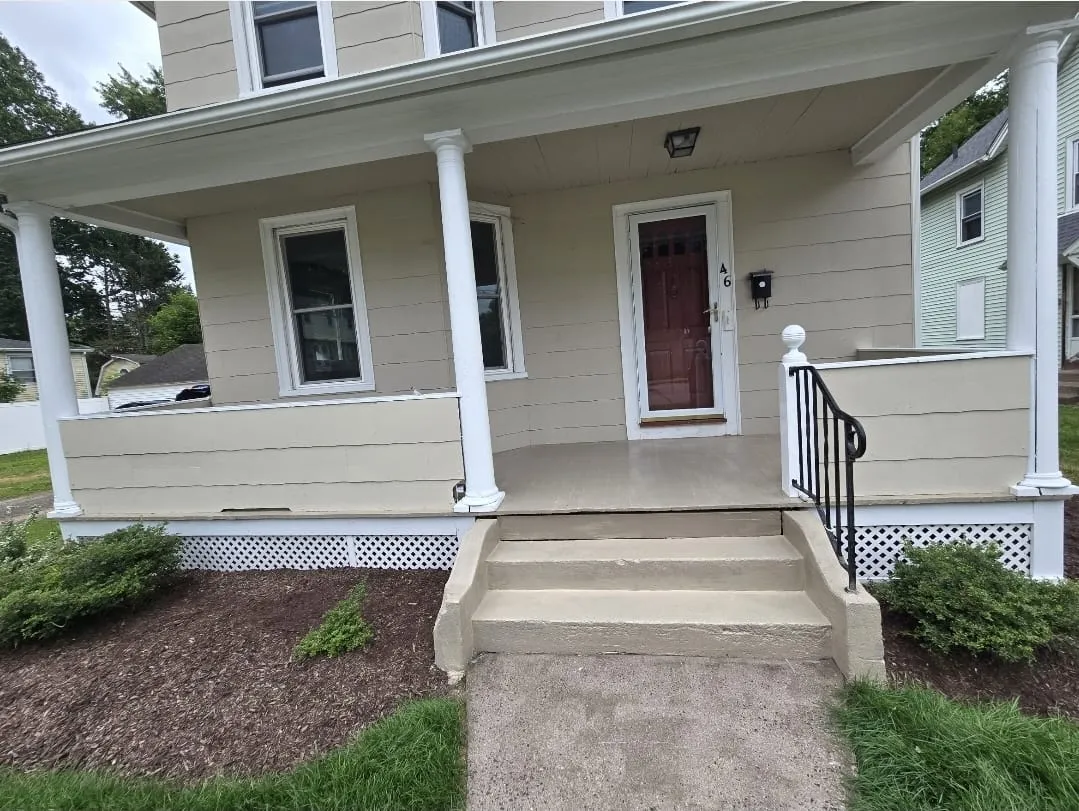
If you own an older home in Connecticut, you have probably pushed a thumb into a piece of exterior trim and felt it give. That soft spot is the visible end of a process that started years earlier, somewhere you could not see. Exterior wood rot in Connecticut is not a sign that you neglected the house. It is what happens when wood, water, and time sit together long enough.
We get wet springs, humid summers, and a freeze and thaw cycle that runs all winter. Every one of those conditions works on the same weak points. The good news is that most rot is local. It starts at a joint, an end grain cut, or a fastener hole, and it spreads from there. Catch it while the surrounding wood is still sound and the repair stays small.
Rot Starts Where You Cannot See It
Wood does not rot evenly. It rots where water can get in and cannot get back out. That means end grain first, because cut ends drink water like a straw. Then joints, where two pieces meet and the seam opens a fraction with every seasonal cycle. Then fastener holes, where a nail or screw left a path straight into the interior of the board.
None of those places are visible from the driveway. What you see is the face of the board, and the face is usually the last part to fail. That is why an exterior trim piece can look completely fine and still be gone underneath.
Connecticut Weather Makes It Worse
Connecticut is hard on exterior wood in a specific way. Water gets into a joint during a wet fall. Then temperatures drop, that water freezes, and it expands. The joint opens slightly wider. Spring comes, the ice melts, and now there is a bigger opening for the next round of water.
Shaded lots make it worse. A house under mature trees in Wilton or Weston stays damp for days after a storm, while an open lot dries out in hours. Near the shoreline in Greenwich, Darien, or Westport, salt adds a second problem. It corrodes fasteners from inside the wood, which loosens boards and opens more paths for water.
Repair or Replace? The Wood Tells You
The honest answer comes from cutting back to solid material. A contractor pushes a tool into the soft area and keeps going until the wood pushes back. If the damage stops after an inch or two and everything around it is sound, that is a repair. The bad section comes out, new material goes in, and the profile gets matched to what is already there.
If the rot has traveled along the grain or reached the framing behind it, that is a different job. At that point, replacing the piece is cheaper than repairing it twice.
What a Proper Exterior Repair Looks Like
Three things separate a repair that lasts from one that buys a season. First, the rot gets cut back to solid wood, not covered. Filler over soft material is a cosmetic decision, not a repair. Second, new exterior wood gets primed on all six sides before it goes up. Untreated end grain is the single most common failure point on exterior carpentry.
Third, the joint gets detailed to shed water rather than hold it. That means pitch, sealant where it belongs, and no flat surfaces that let water sit. If you have exterior wood damage on your Connecticut home, get a free estimate or call (203) 385-2517.